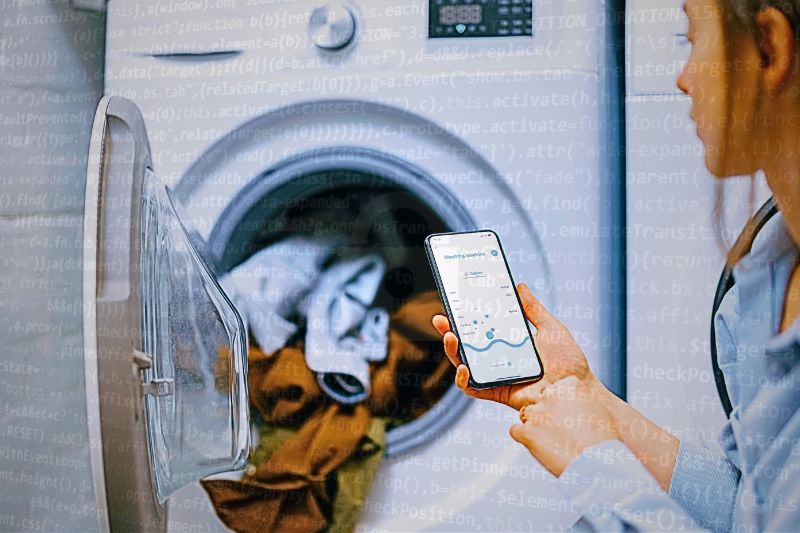
Being able to control your washing machine from an app certainly has its perks. But does a Wi-Fi enabled washing machine mean that someone else could gain control of it too?
Cyberattacks are increasingly in the news. In October and November 2026, supermarkets in several European countries were hit by cyberattacks that affected their fridges and freezers. Hackers turned up the temperature of these devices, causing food to spoil and resulting in tens of millions of euros of damage.
This raises the question of whether or not household smart devices could be at a similar risk, and what it could mean if they were hacked.
Here’s what you need to know, along with some simple ways to keep your washer secure.
Can a Smart Washing Machine Be Hacked?
Yes, potentially. However, that doesn’t mean someone can easily take control of your washing machine just because it’s connected to Wi-Fi.
When you set up a smart washer, you’ll usually connect it to your home network and link it to the manufacturer’s app. One way your washing machine could be at risk is if you sign into the app using a password that has been leaked in a data breach.
This is more likely to happen if you reuse the same password in lots of different places. If you use the same password for everything, it only requires one account to be compromised for hackers to potentially gain access to your other accounts and services that use the same password. This can be avoided by using different passwords for each account and by using two-factor authentication (getting a verification code sent to your phone when you try to log in).
There are other possible ways in besides accessing the app with a password though. Smart washing machines run software that can contain security flaws. Vulnerabilities could also exist in the manufacturer’s app or the online services used to communicate with the appliance.
Some washing machines connect to the manufacturer’s server to allow the device to be remotely monitored and controlled. If the software used in this process has security flaws, it could be exploited. Manufacturers should be continually updating this software to patch any security weaknesses. That’s why the UK’s National Cyber Security Centre (NCSC) recommends keeping your smart devices updated by installing any available software updates, even if your device is still working perfectly well.
Fortunately, there haven’t been many reported cases of washing machine software being compromised. In 2025, hackers took down the payment system for internet-connected washing machines at Spinozacampus student accommodation in Amsterdam, allowing residents to do their laundry for free. However, it doesn’t seem like this hack affected how the washing machines themselves worked.
What Could Someone Do if They Hacked Your Washing Machine?
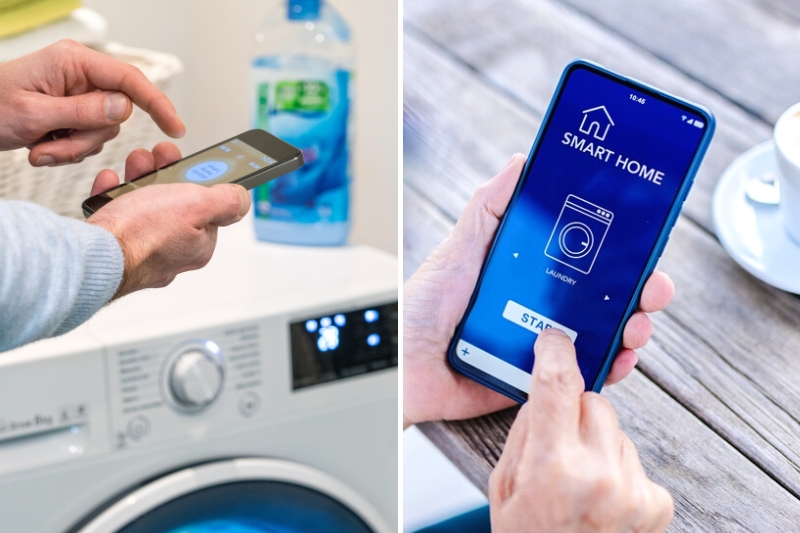
This depends on the washing machine and what its connected features allow you to do. If your app lets you start a programme, change the temperature or adjust the spin speed, someone who gained access to your account might be able to use those functions too.
Someone being able to start or change the settings on a load of washing doesn’t sound particularly worrying. On a light-hearted note, a hacker could ruin a load of delicate clothes by turning the temperature and spin speed up to the max, but this alone wouldn’t put you at risk. However, the real danger would be if hackers could do something like switching on the washing machine’s heating element without there being any water in the drum, as this could be a fire risk. This could be particularly dangerous if it happened while you were asleep.
Could a Hacker Cause a Washing Machine to Flood or Catch Fire?
At the time of writing, there don’t appear to have been any publicly documented cases of malware or hacking causing smart washing machines to flood or cause fire. However, the possibility that this may occur in the future is being taken seriously.
In 2023, research commissioned for the UK’s Office for Product Safety and Standards examined the potential safety risks associated with smart washing machine and other home appliances. They suggested that hackers could try to cause damage to your home by doing things such as the following:
- Turning the washing machine’s heater on without there being any water in the drum, creating a fire hazard.
- Opening the washing machine’s water supply valve, causing a flooding hazard.
- Disrupting the washing machine’s load-balancing mechanisms, making the load unbalanced during the spin cycle and potentially causing mechanical damage.
However, washing machines are designed with robust safety mechanisms such as water-level monitoring, temperature protection and automatic shut-off systems, so hackers would need to find ways around these somehow.
One risk that the 2023 Office for Product Safety and Standards identifies is that smart devices are often ran at times when the owner is either asleep or out of the house. White goods are linked to about three fires a day in England alone, and a fire is much more likely to spread and cause harm if you don’t notice it starting, either because you’re asleep or not at home.
This isn’t usually a cybersecurity issue, as it could happen because you’ve deliberately set an appliance to run at on a cheaper energy tariff or to have your clothes clean by the time you get home.
Could Washing Machines Be Targeted in a Major Cyberattack?
The recent hacks affecting European supermarket refrigerators and freezers is an example of how cybercriminals or hostile state actors can gain control of connected appliances. However, the vulnerabilities exploited in commercial refrigeration controllers don’t necessarily exist in domestic washing machines.
Just selecting a hotter wash temperature on a washing machine wouldn’t cause any damage (except maybe to your laundry). To cause dangerous overheating, an attacker would need to override the internal controls and safety mechanisms somehow, which would be much more involved than simply changing standard temperature settings.
A more realistic concern is that a manufacturer’s online services could be hacked, exposing your password and/or preventing you from controlling your device via the app. However, smart washing machines can typically still be operated manually, so you could still get your washing done by using the physical controls in this situation.
Does AI Make Cyberattacks More Likely?
Artificial intelligence could make some cyberattacks easier to carry out. AI tools can help cybercriminals find and exploit bugs and vulnerabilities in software more quickly.
The National Cyber Security Centre’s Annual Review 2026 warned that “AI will act as a force multiplier across the cyber threat landscape, allowing skilled threat actors to carry out operational tasking at increasing scale, speed and efficiency”.
There’s also the question of how software is written in the first place. Research published by cybersecurity company Veracode in 2026 found that a substantial proportion of coding tasks completed by AI tools produced code containing known security weaknesses.
This doesn’t mean that washing machines described as being “AI-powered” (or something similar) are necessarily more at risk. When a washing machine is described as using AI, this usually means that it uses sensors and algorithms to automatically adjust things like water usage, cycle length or washing settings, which is what most modern washing machines do anyway, so “AI-powered” in this sense is a bit of a marketing gimmick.
However, the 2023 Office for Product Safety and Standards report does warn that appliances with lots of features may have more risks, stating that “the novelty of some of their features, makes it potentially more likely that they will contain design vulnerabilities”. Therefore, a relatively “dumb” washing machine without lots of innovative features may be safer.
How Can You Keep Your Smart Washing Machine Secure?
A few simple precautions can help protect your washing machine and the other devices connected to your home network.
1. Give the app its own password
Use a password that you don’t already use for other accounts, even if you only open the washing machine app occasionally. If two-step verification is available, switch it on. This makes it much harder to access your washing machine if someone gets hold of your password.
2. Check for updates in two places
Your washing machine’s app and the appliance itself may both need updating.
Check your phone’s app store for updates to the manufacturer’s app.
The washing machine will also have its own software, sometimes called firmware. Check the manufacturer’s instructions to find out how updates are installed.
Some models update automatically, while others may require you to approve updates through the app or appliance controls. It’s a good idea to always approve these updates as soon as possible rather than skipping them.
3. Switch off features you don’t use
Do you always press Start on the washing machine itself? If so, you might not need the ability to start programmes remotely.
Check whether the manufacturer’s app allows you to disable remote controls you don’t use. If you never use the app at all, you might as well disconnect the washer from Wi-Fi altogether. A lot of people these days buy washing machines that happen to have Wi-Fi but still prefer to operate the machine the old-school way.
4. Before buying, check how long security updates will ne provided
If you’re shopping for a new smart washing machine, it’s worth checking how long the manufacturer promises to provide security updates.
Since 29 April 2024, the UK’s Product Security and Telecommunications Infrastructure regime has required manufacturers of covered smart products to publish the minimum period for which security updates will be provided.
The rules also include requirements relating to default passwords and reporting security vulnerabilities. However, they don’t require every washing machine to receive updates for a fixed number of years.
Since washing machines can last a decade or longer, it’s worth considering whether their connected features will remain supported throughout their useful life.

What Should You Do if Your Washing Machine Starts Acting Strangely?
An unexpected change to a washing programme doesn’t necessarily mean someone has hacked your washing machine. However, if you notice unfamiliar account activity, unexpected remote commands or settings changing without your input, it’s worth investigating.
Start by changing your manufacturer’s app password and enabling two-step verification if available.
You can also disconnect the washing machine from Wi-Fi while you investigate.
Check for software updates and follow the manufacturer’s guidance on resetting the appliance if you suspect its security has been compromised.
If you’re concerned about unauthorised access to your account, contact the manufacturer.
If the washing machine is overheating, leaking water or behaving in a way that could be dangerous, stop using it and follow the manufacturer’s safety instructions. Don’t continue operating a potentially unsafe appliance simply to see whether the problem happens again.
Should You Disconnect Your Washing Machine from Wi-Fi?
For most households, there’s no need to panic about having a Wi-Fi-connected washing machine.
A properly maintained smart appliance from a reputable manufacturer isn’t automatically unsafe simply because it connects to the internet.
However, every additional connected device introduces another potential security risk, however small.
If you regularly use your washing machine’s app, the convenience may outweigh that risk, particularly if you keep everything updated and use sensible security precautions.
If you only ever operate your washing machine using the buttons on the front, you might wonder whether having it connected to Wi-Fi is really necessary. Disconnecting it removes one potential route for internet-based attacks, while generally allowing you to continue using it as an ordinary washing machine.
After all, your washing machine doesn’t need an internet connection to get your clothes clean.


In The Wash is your guide to the best laundry and cleaning products, tips and tricks. Our mission is to solve the UK’s cleaning and laundry dilemmas!