What is the best washing machine to buy in the UK right now?
You want a machine which can handle large wash loads, look after baby clothes and delicates, make laundry days easier and also not add too much onto your energy bills. There are washing machines which can do all of that and more, and we’ve collected together some of the best options on offer.
In this guide, we’ll look at what we consider to be the best washing machines on the market right now, including highly-rated machines from reliable brands. We have also included some budget options, as we know not every household can shell out £500+ on a washing machine.
Read on for our picks of the top models, plus more information to help you choose the right washing machine for your home.
Our Top Picks
1. Bosch WGG254Z1GB (Best for most people)
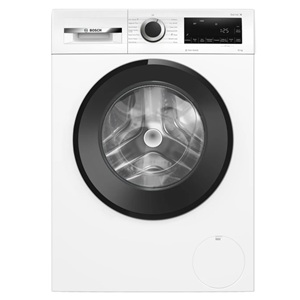
Capacity: 10 kg
Type: Freestanding
Energy class: A
Energy use per cycle: 0.511 kWh
Noise level (spin): 74 dB
Why we picked it:
The Bosch WGG254Z1GB is a great all-round washing machine, and is one of the most popular and highly rated models on the market in the UK. It’s a freestanding machine with a large 10 kg capacity, making it an ideal family washing machine.
What we like:
- Very highly rated by users
- Handy selection of two quick wash cycles (15 and 30 minutes)
- Generous 10 kg capacity for standard washing programmes
Potential drawbacks:
- It’s a mid-priced machine, and there are several cheaper options on the market
- Energy usage on longer cycles is higher than average
Check price and reviews:
2. Hisense 3S Series WF3S8043BT3 (Best value)
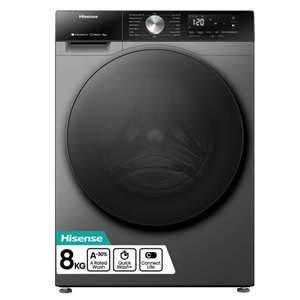
Capacity: 8 kg
Type: Freestanding
Energy class: A
Energy use per cycle: 0.331 kWh
Noise level (spin): 72 dB
Why we picked it:
This cheap washing machine from Hisense offers a good selection of both regular and quick wash programmes, including 15-, 30-, and 40-minute cycles. It has picked up a lot of excellent user reviews and offers all of the features the average household needs.
What we like:
- Good value for money
- Plenty of features and programmes
- Relatively energy efficient
Potential drawbacks:
- Drum capacity is relatively small for a freestanding machine
Check price and reviews:
3. AEG OkoMix LF8E8436BI (Best integrated model)
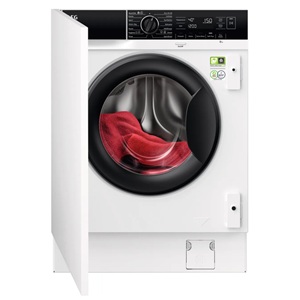
Capacity: 8 kg
Type: Integrated
Energy class: A
Energy use per cycle: 0.471 kWh
Noise level (spin): 68 dB
Why we picked it:
The AEG OkoMix LF8E8436BI is a bit pricey, but it’s very highly rated by users who praise it for its quietness, ease of use and flexibility. If you want an integrated machine that will fit behind a cupboard door in your kitchen, it’s a great choice.
What we like:
- Low water consumption (44 L/cycle compared to the median of 46 L/cycle for integrated machines)
- Relatively quiet (68 dB compared to the median of 72 dB for integrated machines)
- Short 20 minute Quick Wash setting
- Plenty of cycles and settings to choose from
Potential drawbacks:
- About twice as expensive as the average integrated washing machine
Check price and reviews:
4. Hisense WF5S1245BB (Best large capacity model)
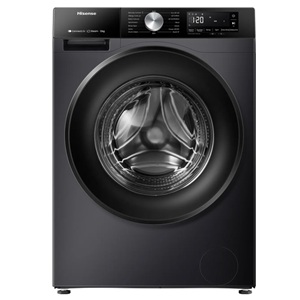
Capacity: 12 kg
Type: Freestanding
Energy class: A
Energy use per cycle: 0.541 kWh
Noise level (spin): 72 dB
Why we picked it:
The Hisense WF3S1243BB3 is one of the most popular 12 kg models on the market. It’s consistently highly rated by users, and offers good value for money. There are some slightly bigger 13 kg models available, but 12 kg should be enough for most big families and people with a lot of washing to get through.
What we like:
- Cheaper than the average 12 kg machine
- Auto wash adjusts settings automatically to suit your laundry
- 15-, 30- and 49-minute quick wash cycles
- Track energy and water usage using the ConnectLife app
Potential drawbacks:
- Higher energy use than the median 12 kg machine (0.43 kWh/cycle compared to 0.33 kWh/cycle)
Check price and reviews:
5. Bosch Series 8 WIW28502GB (Quietest)
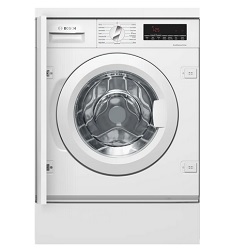
Capacity: 8 kg
Type: Integrated
Energy class: C
Energy use per cycle: 0.62 kWh
Noise level (spin): 66 dB
Why we picked it:
Producing just 66 decibels of noise on a spin cycle, the Bosch Series 8 WIW28502GB is the quietest washing machine we could find on the market. To give you some context, 66 decibels is roughly the same volume as a loud conversation or laughter. This is the maximum volume of the machine that you will hear on the spin cycle; the wash cycle will be much quieter.
What we like:
- One of the quietest washing machines available
- 15-minute quick wash cycle and SpeedPerfect (reduces cycle times) are good when you’re in a hurry
Potential drawbacks:
- Relatively expensive
- Relatively poor energy use per cycle
Check price and reviews:
6. Samsung WF90H09C4ST1 (Most energy efficient)
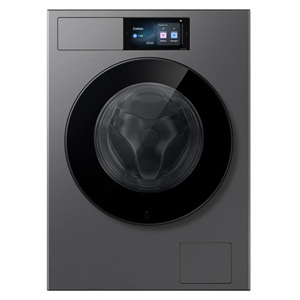
Capacity: 9 kg
Type: Freestanding
Energy class: A
Energy use per cycle: 0.173 kWh
Noise level (spin): 72 dB
Why we picked it:
The Samsung WF90H09C4ST1 has the lowest energy usage per cycle of any washing machine we could find on the market at just 0.173 kWh. This is less than the average figure for a freestanding washing machine (0.417 kWh per cycle). According to the Samsung product page, it “exceeds Class A minimum efficiency requirements by up to 65%”.
One interesting thing about this machine is that it uses so little energy despite having a relatively large capacity (9 kg). This means that you can wash a lot of clothes while only using a small amount of energy.
What we like:
- Lowest energy use per cycle on the market
- Generous 9 kg capacity
Potential drawbacks:
- It’s expensive – a slightly less efficient but cheaper machine would make more financial sense overall
- Not particularly economical with water. It uses 50 litres per cycle, which is just above the median of 49 litres for a 9 kg freestanding washing machine.
- Doesn’t have many user reviews, so its long-term performance is hard to judge
Check price and reviews:
7. Cater-Wash CW8580 (Best top-loader)

Capacity: 8 kg
Type: Top-loader
Energy class: A
Why we picked it:
The Cater-Wash CW8580 is one of the few conventional top-loading washing machines available on the market in the UK. With a capacity of 8 kg, it can wash about the same amount of laundry as the typical front-loading washing machine. Measuring 87.5 cm high x 40 cm x 63 cm deep, it could be a good choice for narrow spaces.
What we like:
- A good alternative to a front-loading washer for narrower spaces
- Good choice of washing programmes and settings
- Reasonably priced
Potential drawbacks:
- Can be noisy on the spin cycle
Check price and reviews:
Things to Consider When Choosing a Washing Machine
Capacity
Consider the amount of laundry you typically wash at a time and choose a washing machine with a suitable capacity. A washing machine with a bigger capacity (9 kg or more) could be better for larger families or people who need to do a lot of laundry.
Installation type
Washing machines can be freestanding or integrated.
A freestanding washing machine is a standalone unit that can be placed anywhere, whereas an integrated washing machine is built into a kitchen unit and is designed to be hidden behind a cabinet door.
Here are some factors to consider when deciding between a freestanding and integrated washing machine:
- Appearance: An integrated washing machine is hidden behind a cabinet door and can blend seamlessly into your kitchen design, giving a more streamlined and cohesive look. A freestanding washing machine, on the other hand, can come in a range of colours and finishes, and can be a design feature in itself.
- Installation: Integrated washing machines require professional installation, as they need to be fitted into a specific space and connected to plumbing and electricity. Freestanding washing machines can be easily installed by anyone.
- Flexibility: Freestanding washing machines can be moved around and relocated as needed, while integrated washing machines are typically a permanent fixture in the kitchen and cannot be moved.
- Cost: Integrated washing machines tend to be more expensive than freestanding washing machines, partly due to the cost of installation and partly because they often come with additional features.
- Kitchen design: If you are renovating your kitchen, an integrated washing machine can be incorporated into your kitchen design more seamlessly, whereas a freestanding washing machine can be a standalone feature that doesn’t necessarily match the rest of the kitchen design.
Type of washing machine
There are two main types of washing machines: top-loading and front-loading.
Front-loading machines are by far the most common type in the UK. There are a few top-loading models available, but not many.
Top-loading machines can be better for those who find it difficult to bend down.
Energy usage
According to our research, the average washing machine uses 0.793 kWh of energy per cycle, which would cost about 27p in energy costs at the time of writing.
This information is usually stated on product descriptions, so you can use the 0.793 kWh figure as a benchmark to see if the particular model you are looking at is more or less energy efficient than average.
The most energy-efficient washing machines can use as little as 0.459 kWh of energy per cycle (costing about 16p).
You could save £20 a year or more by choosing a more energy-efficient washing machine compared to the average model. However, whether or not this will save you money overall depends on the up-front cost of the machine as well.
Spin speed
One of the key bits of information you will find on washing machine product descriptions is the spin speed, measured in revolutions per minute (rpm).
The higher the spin speed, the more water is extracted from the clothes, resulting in faster drying times. A higher spin speed can also help to remove more dirt and stains.
Programmes and additional features
Consider any special features that you may need or want in a washing machine, such as a delay timer, quick wash cycles, or an anti-allergy programme.
Price
Set a budget and look for washing machines that fit within your price range. Remember that a higher-priced machine may come with more features and better quality, but it may not necessarily be the best fit for your needs.
The cheapest washing machines cost under £300, while the most expensive can cost over £1,000. The most popular tend to cost around £350 on average.
When considering your budget, you should also factor in delivery and installation costs, as well as the cost of removing your current washing machine if necessary.
Brand and warranty
Look for washing machines from reputable brands that offer a good warranty, so you can have peace of mind in case of any issues with the machine. It’s also worth researching the brand’s reputation for reliability and customer service.
Best Washing Machine Brands
Which washing machine brand should you choose? Here are some of the top brands available in the UK.
AEG
German-based company AEG was founded in Berlin over 100 years ago and was originally known as the German Electricity Company.
The company has been bought and sold several times since being founded in 1883, and the appliance side of AEG is now owned by Electrolux.
AEG is placed in the upper-midrange of the market, with machines typically costing between £400 and £900.
The brand is extremely reliable, with AEG washing machines generally praised by customers for their excellent washing ability.
Many recent models have a much higher drum capacity than washing machines made by other manufacturers, with some AEG machines able to hold up to 10kg washes.
AEG machines generally only come in white, although some models are available in silver.
AEG has introduced several innovative features to their washing machines, such as a steam function for freshening up a small 1.5kg load of dry-clean-only items, and ÖKOMix technology.
With ÖKOMix, the detergent is premixed with water then sprayed directly into the drum where it begins to work straight away (unlike most machines where the laundry, water and detergent are mixed together, and the detergent can take much longer to dissolve).
This means clothes can be washed more gently and at a lower temperature, protecting garments and saving energy.
Beko
Beko is a Turkish based company and was founded in Istanbul, in 1967.
Beko is firmly placed as a budget brand, with most models typically costing between £200 and £350 – similar to brands such as Hotpoint and Indesit.
It’s a very popular brand in the UK, with huge numbers of machines sold each year.
Many customers rate them highly for value for money, and despite the lower price Beko machines are generally reliable – however even though there are machines with special programs available, don’t expect many cutting-edge technological features from this budget brand.
One area where Beko does excel is choice of design – not only are there many models to choose from, but Beko produce machines in a much wider variety of colours than many other brands.
For example, some models are not only available in the usual white and silver, but also in shades such as red, black and various greys.
Bosch/Siemens
Bosch and Siemens are the principal brands forming part of the German company BSH Hausgeräte GmbH, (or BSH Home Appliances), the largest manufacturer of home appliances in Europe, and their washing machines share many of the same parts and technologies.
The Siemens brand dates back to 1847 and Bosch was founded in Stuttgart in 1886. In 1967 Robert Bosch GmbH and Siemens AG set up BSH Hausgeräte GmbH as a joint venture, however in September 2014, Robert Bosch GmbH agreed to purchase Siemens’ 50% stake in the company.
Bosch products and Siemens products are currently placed as upper mid-range in the washing machine market, however, both brands do have premium models, which offer more advanced technology. This extra complexity and these additional features obviously come at a higher price, some exceeding the £1000 mark.
Both brands are generally considered to be reliable and offer innovative technological features such as remote operation via smartphone or tablet PC.
Bosch and Siemens washing machines are sleek and modern in design; however, most models are only available in white.
Hoover
Hoover is one of the World’s best-known appliance manufacturers, founded in Ohio, USA in 1908.
The Hoover Group quickly expanded into the UK and Europe and continued to grow until the 1980s.
In 1995 Candy purchased Hoover European Appliances Group with exclusive rights to the Hoover brand in Europe, North Africa and the Middle East.
Hoover is considered a budget-mid-priced brand today, producing washing machines that are affordable to many, but which don’t always rate highly on reliability tests and with consumers.
Some Hoover models are available in black, as well as white or silver – and look quite stylish for a budget appliance.
Hoover machines don’t offer as much as higher-end brands in the way of advanced technology, however, top-of-the-range Hoover washers are beginning to roll out cutting-edge technology, such as remote control via an app. These extra features are, of course, being sold for a higher price than the standard washing machine models.
Hotpoint
Hotpoint was created in 1911 in Ontario, California and in 1920, it established Hotpoint Electric Appliance Company Limited in the United Kingdom, a joint venture with competitor General Electric.
Recently, it was acquired by American appliance firm Whirlpool.
Hotpoint is an affordable budget brand, with an average price of around £300-£350 for a washing machine.
Hotpoint machines offer better reliability than many other budget-range machines; however, washing performance is much poorer than machines from mid and high-range brands.
Unlike machines from some other budget brands, even the cheaper Hotpoint appliances often have useful features such as remaining-time displays and various high spin speeds.
Some models also use premixing technology called Direct Injection, where detergent and water are premixed and sprayed directly into the wash, allowing washing temperatures to be reduced whilst laundry is still washed effectively.
Indesit
Indesit was founded in Fabriano, Italy in 1975, and was recently bought by the American company Whirlpool, which (as mentioned above) also makes Hotpoint.
Indesit is a budget brand, with most machines costing less than £300 and top-of-the-range machines costing just a little more.
Indesit washing machines aren’t the most reliable appliances, even amongst budget brands, and they’re also not the best for removing dirt from clothes.
They don’t boast many features or cutting-edge technology like other branded washing machines do, however, they are easy and simple to use and offer several colour options including stylish black.
LG
LG is based in Seoul, South Korea, and was founded around 70 years ago.
LG is placed in the upper-midrange of the market, with some machines starting at as little as £350. More advanced models with larger drum capacity do exceed the £1000 mark, but you can get something similar for around £700.
LG washing machines offer good reliability for the price, second only to high-end brands such as Miele.
The direct driver motor rotates the washing machine’s drum directly rather than using belts, chains or gearboxes and is a design feature that has become associated with the LG brand, although this is not exclusive to LG.
This feature can reduce the noise of the machine, and also increases the reliability with fewer parts to potentially fail.
Miele
German-based company Miele was formed 118 years ago in Herzeblock, and remains a family-owned business.
Miele is a high-end brand, with machines starting at around £550 but with some models costing well over £1000.
Miele washing machines are generally considered the most reliable machines available on the market, and also offer five-year or even ten-year parts-and-labour warranties as standard.
Miele tests their machines for twenty years’ worth of use and they are expected to last twice as long as competitor’s models.
In addition to being one of the most reliable machines you can buy, Miele washing machines also offer leading-edge technology and unique features, for example a two-phase detergent dispensing system called TwinDos, designed to improve washing performance, and a patented honeycomb drum design to help protect your laundry.
Miele washing machines have a sleek and stylish design, however, they are usually only available in white or silver.
Samsung
Samsung are a multinational conglomerate formed around 80 years ago in Daegu, South Korea.
Samsung is often more well-known for producing technology such as mobile phones, however, they are a growing presence in the UK washing machine market.
Samsung washing machines are placed in the upper-midrange of the market, with models available from around £350, but some advanced machines may cost well over £1000 (one specific model would get you closer to a £2000 spend)!
These are generally reliable washing machines and perform well, with excellent washing capabilities.
Samsung washing machines are known for their advanced features and effective use of new technology, including their Ecobubble system which mixes detergent and water then injects air to create activated foam, which gets deeper into the fibres of clothing to clean more quickly and efficiently.
Another useful function is the AddWash feature, a hatch in the door which allows you to add extra items halfway through a wash with ease.
Smeg
Smeg was formed in Italy in 1948 and remains a privately owned family company.
Smeg are a premium brand, well known for their stylish fridges but now producing a wide range of other appliances including washing machines. Their washing machines can range vastly in price from around £450 to over £1000.
Unsurprisingly for a company well-known for their beautifully designed appliances, Smeg produce sleek and attractive washing machines, which also offer excellent reliability and up-to-date features such as LED displays.
Their 50’s style free-standing washing machines copy the retro design of the famous Smeg fridges and have a completely different look to any other washing machines on the market.
They’re also available in pretty and unusual colours such as cream, pastel blue and pink – perfect for a retro-inspired kitchen or laundry room.
Zanussi
Formed in 1916 in Italy, Zanussi began to export products in 1946 and now produces a wide range of washing machines for the UK market.
Zanussi was originally a mid-range brand in the UK, however, in recent years they have begun to produce more affordable machines in the low budget bracket, starting at as little as £200.
Integrated models are available, but Zanussi is generally associated with freestanding machines.
They have a good reliability record for lower-priced washing machines and are known to be excellent at washing clothes.
Zanussi doesn’t specialise in advanced washing technology, however, they do offer plenty of features that make washing easier, particularly for large families and busy households, such as a large 10 kg drum capacity, and generously sized doors to make loading and unloading laundry easier.


In The Wash is your guide to the best laundry and cleaning products, tips and tricks. Our mission is to solve the UK’s cleaning and laundry dilemmas!